
By alphacardprocess January 26, 2026
Electricians don’t get paid like most retail businesses. Your jobs happen on-site, invoices can be large, change orders pop up mid-project, and customers often want to pay the moment the work is done.
That’s why payment processing for electricians needs to be fast, mobile, secure, and designed for field service workflows—not just a generic card reader.
In this guide, you’ll learn what “best” really means for payment processing for electricians, which solution types fit different electrical businesses (service calls, remodels, new builds, commercial, maintenance contracts), what features reduce chargebacks, and how to lower fees without hurting approval rates.
You’ll also see what’s changing in 2026—like Tap to Pay, real-time payments, and security standards—so your payment processing for electricians stays modern, compliant, and customer-friendly.
Why Payment Processing for Electricians Is Different From Typical Small Business Payments
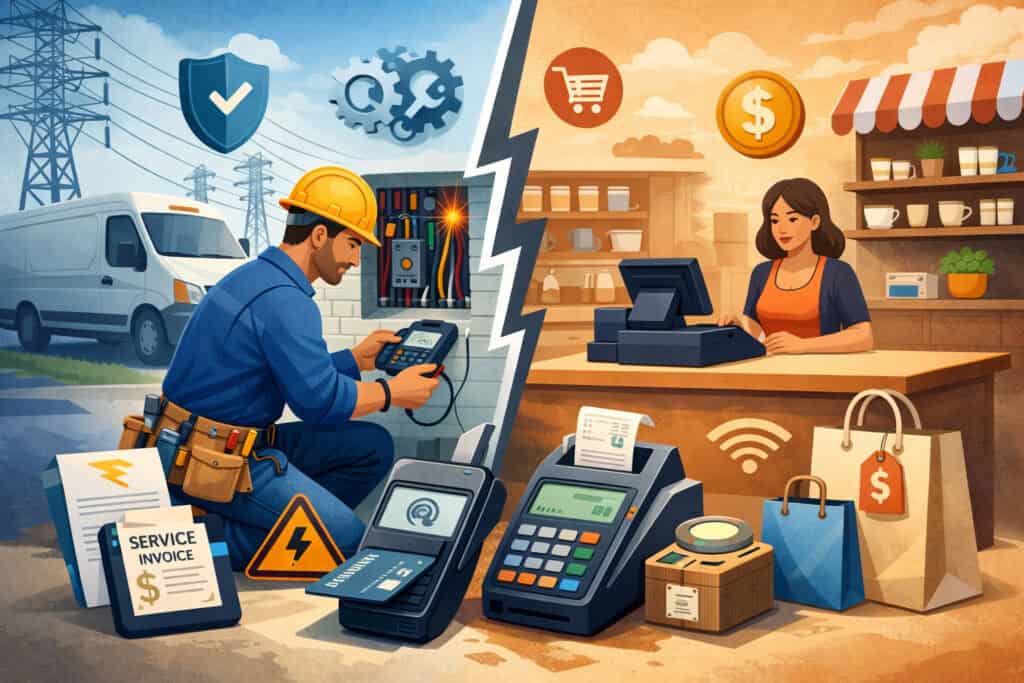
If you run service calls, you know the payment conversation can happen in a driveway, a basement, or a job trailer. That alone makes payment processing for electricians a different game.
You’re not just taking payments—you’re proving work completion, collecting signatures, handling deposits, and often financing higher-ticket projects.
Many electricians also deal with “split timing”: a deposit today, a progress payment next week, and the final balance after inspection. A basic retail processor can accept a card, but it may not support smart invoicing, partial payments, stored cards with permission, or job-based receipts. When that happens, electricians chase money and waste time—two things that destroy profit margins.
Another key difference is ticket size. A $99 outlet replacement is one thing; a $9,000 panel upgrade with trenching is another. High tickets can trigger fraud filters, create downgrades, or result in higher processing costs if the transaction data is incomplete.
Strong payment processing for electricians includes tools like customer verification, clear invoice descriptions, and digital proof-of-service to reduce disputes.
Electricians also rely on reputation. Customers trust you in their home, so a smooth checkout experience matters. Text-to-pay, emailed invoices, QR codes, and mobile tap payments can improve reviews and reduce awkward payment friction.
That’s why choosing the right payment processing for an electrician’s solution is not just about rates—it’s about how you get paid, how fast, and how confidently.
Core Features to Look for in Payment Processing for Electricians
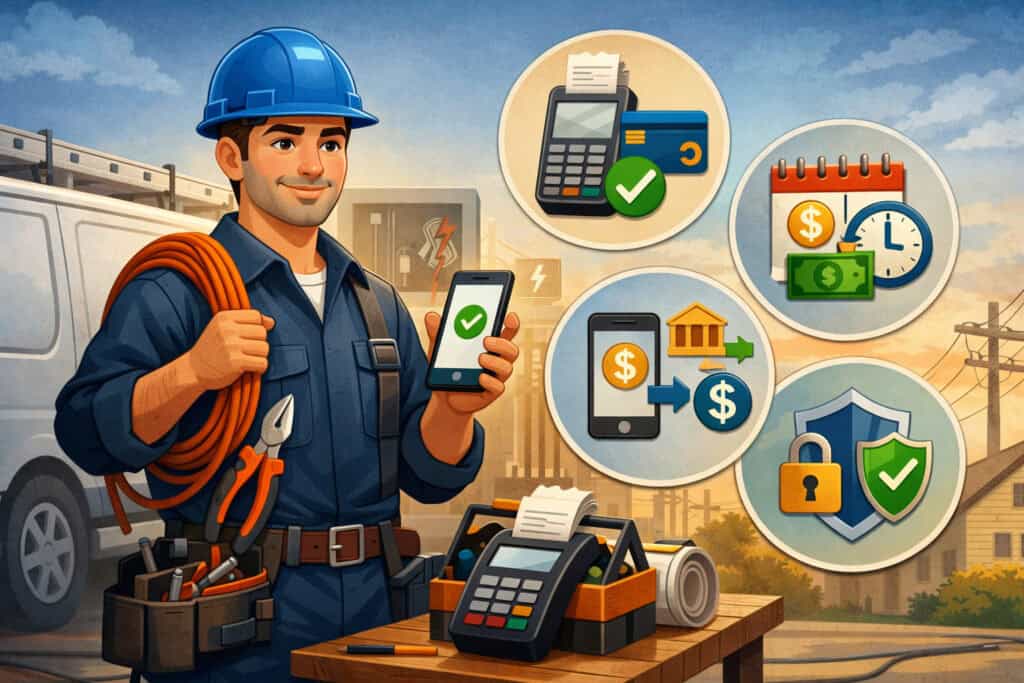
The best payment processing for electricians setup combines flexibility, speed, and protection. Before you compare providers, confirm the features below, because they directly impact cash flow and the amount of time your team spends on billing.
Mobile-first acceptance that works on job sites
Electricians need payments wherever the job happens. Look for mobile readers that support tap, chip, and swipe, plus offline or weak-signal modes if you work in basements or rural areas. Even better: phone-based acceptance (Tap to Pay) so technicians can collect immediately with minimal hardware.
Invoicing, estimates, and partial payments
Strong payment processing for electricians should handle estimates that convert into invoices, deposits, progress payments, and “remaining balance” billing. Customers appreciate clarity, and clear invoice trails reduce chargebacks.
Text-to-pay and email pay links
Text-to-pay is a cash flow accelerator for payment processing for electricians. When a customer can click a link and pay from their phone, you get paid faster and reduce “I’ll do it later” delays.
Recurring billing for maintenance agreements
If you do service plans or commercial maintenance, recurring billing is a must. Payment processing for electricians should support autopay with customer authorization, retry logic for failed payments, and easy plan upgrades.
Fast deposits and instant payout options
Waiting days for funds hurts. Many providers offer same-day or instant payouts (sometimes for a fee). Even if you don’t use instant daily, having the option is valuable when payroll or materials are due.
Risk controls and dispute tools
Look for address verification, digital signatures, line-item invoicing, customer receipts, and simple evidence submission tools. These features make payment processing for electricians safer and reduce revenue leakage.
The Main Types of Payment Processing for Electricians (And When Each One Wins)

There isn’t one single “best” option for everyone. The right payment processing for electricians depends on job size, how you sell, and how you dispatch technicians.
1) Mobile card reader + phone app (fastest for service calls)
This is ideal for residential service work, quick repairs, and small upgrades. A technician completes the job, takes a payment immediately, and emails or texts a receipt. This style of payment processing for electricians reduces unpaid invoices drastically.
2) Invoicing-first processors (best for larger jobs and progress billing)
If your work includes remodels, panel upgrades, generators, EV chargers, or commercial bids, invoicing-first systems shine. They support deposits, scheduled payments, and payment links tied to a professional invoice. For larger ticket sizes, invoicing-based payment processing for electricians can also reduce customer hesitation because everything is documented.
3) Field service platforms with built-in payments (best for teams and dispatch)
If you manage multiple trucks, you need scheduling, job notes, photos, and payment capture in one flow. Field service platforms bundle these tools so the office and technicians stay aligned. This becomes “ops-grade” payment processing for electricians—less admin work, fewer mistakes, faster cash.
4) ACH and bank transfer rails (best for commercial and high-ticket work)
For large balances, ACH can reduce fees compared to cards. Some customers prefer bank payments for big invoices. The best payment processing for electricians includes ACH options alongside cards so you can offer choice without juggling systems.
5) Real-time payment options (the future of faster settlement)
Instant payment networks continue to grow, and more businesses want faster movement of funds. For example, the RTP® network reported strong growth metrics in 2024 (value and volume increases) and positioned that momentum into 2025.
As adoption rises, expect more electricians to include instant payment options as part of modern payment processing for electricians.
Best Payment Processing Solutions for Electricians: Top Solution Categories
Instead of listing a random “top 10,” it’s more helpful to match electricians to solution categories that consistently work. Below are the most practical categories of payment processing for electricians, how they help, and what to watch out for.
All-in-one POS-style mobile payment apps (simple and quick)
These are popular because they’re easy to start. You can accept cards quickly, create invoices, and sometimes add basic inventory. For electricians who want an easy entry point, this approach can be a solid baseline for payment processing for electricians.
Where they struggle is customization: complex partial payments, job-costing, technician permissions, and deep reporting may be limited. Also watch for sudden account holds if your ticket size jumps unexpectedly—some providers are tuned for small retail tickets, not electrical projects.
Payment gateways + invoicing + virtual terminal (flexible for office + field)
This setup works well for electricians who take payments in multiple ways: in-person for service calls, phone payments for urgent jobs, and emailed invoices for larger work. A gateway + virtual terminal approach can create a strong payment processing for electricians system when combined with good invoicing.
Key benefits include better control over receipts, customer records, and payment timing. Just confirm that your gateway supports modern security and that fees are transparent.
Field service management platforms with embedded payments (best for scaling)
If you dispatch technicians daily, you’ll appreciate having scheduling, job notes, estimates, invoices, and payment capture in one tool. This reduces double entry and missed payments. For growing companies, this is often the best long-term payment processing for electricians.
You’ll want to compare: payment rates, whether you can bring your own merchant account, deposit speed, customer portal quality, and how well the platform handles partial payments and change orders.
Merchant account providers tailored to service businesses (best for stability and support)
A dedicated merchant account can be a strong choice if you process higher volume or higher tickets. Pricing can be more negotiable, underwriting can be more stable, and support can be more hands-on. For serious operators, this can be the “pro tier” of payment processing for electricians.
The tradeoff is setup complexity. You’ll need a clean application, consistent processing history, and strong documentation. But once set up properly, it can be a dependable backbone.
How to Choose the Best Payment Processing for Electricians Based on Your Business Model
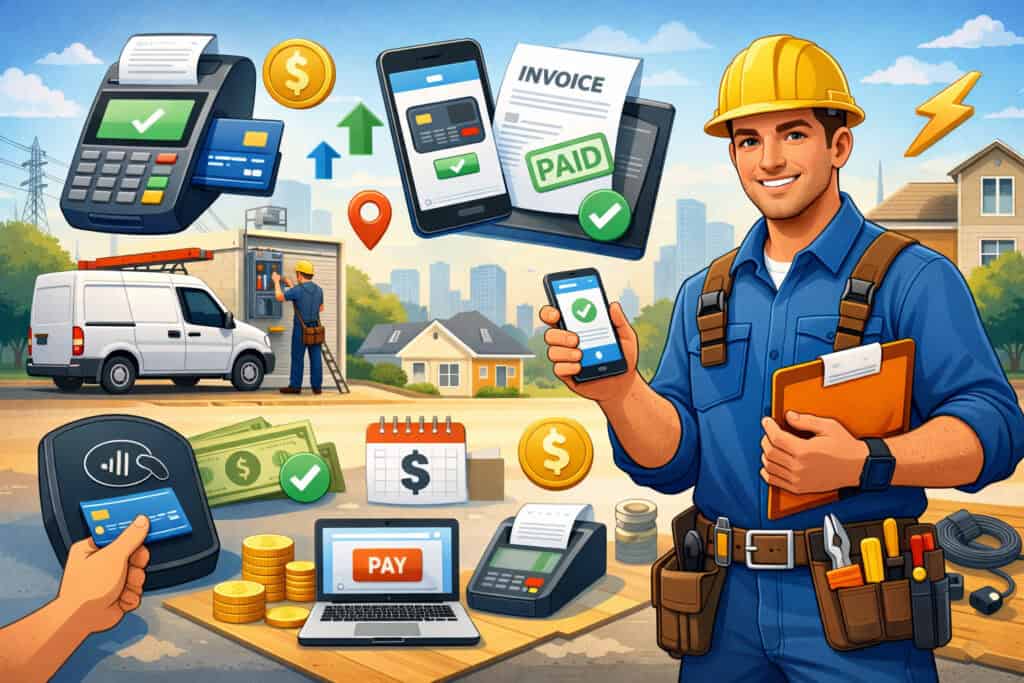
“Best” depends on what kind of electrician you are. Use these matching rules to pick the right payment processing for electricians to approach quickly.
If you do mostly residential service calls
Prioritize speed and ease: mobile acceptance, Tap to Pay, instant receipts, and simple tipping controls (if you use tips). Your goal is to close out each job on-site so nothing becomes an account receivable. In this model, payment processing for electricians should feel like a checkout button, not a billing project.
If you do panel upgrades, EV chargers, generators, or remodels
Prioritize deposits, invoicing, partial payments, and financing options. Customers paying large balances want documentation. Your payment processing for electricians should include clear invoice breakdowns, digital approvals, and payment schedules.
If you do commercial electrical work
Prioritize ACH, purchase order support, net terms workflows, and strong reporting. Many commercial clients pay by check or bank methods, and you’ll need tools that reduce back-and-forth. The right payment processing for electricians in commercial settings blends card convenience with bank-based options for big invoices.
If you manage multiple technicians
Prioritize permissions, role-based access, technician-level reporting, and job-to-invoice syncing. A field service platform with embedded payments often wins here because it keeps the team aligned. In multi-tech operations, payment processing for electricians must be trackable and consistent.
Cutting Processing Costs Without Breaking Your Cash Flow
Electricians often focus only on the rate, but the real cost of payment processing for electricians includes fees, time, failed payments, disputes, and delayed deposits. Here are practical ways to cut costs while keeping payments smooth.
Offer ACH for large invoices (while keeping cards available)
If a customer is paying several thousand, ACH can significantly reduce fees versus card rails. The best payment processing for electricians systems let you offer both, so the customer chooses. You still keep card acceptance for customers who want points or speed.
Improve approval rates with better transaction data
Invoiced payments with clear descriptors reduce declines and disputes. Include job address, invoice number, and a short description (“Panel upgrade deposit,” “EV charger final”). Clean data helps your payment processing for electricians perform better at higher ticket sizes.
Avoid “cheap hardware trap”
Some low-cost systems make money through higher processing fees or limited support. Electricians should evaluate total cost: fees + payout speed + support + dispute tools. Often, a slightly higher monthly fee delivers a better payment processing for electricians outcome.
Use surcharging and convenience fees carefully (and legally)
Rules vary by card brand and by state. If you choose to add fees, do it transparently and with proper signage and invoice wording. A sloppy surcharge strategy can increase complaints and chargebacks, hurting your payment processing for electricians performance.
Security and Compliance: What Electricians Must Know in 2026
Security isn’t optional anymore, even for small contractors. Customers are more aware of fraud, and payment standards have tightened. Modern payment processing for electricians should reduce your security workload by using tokenization and certified tools.
PCI DSS v4.0 matters more now
PCI DSS v4.0 introduced new requirements and included a transition period. Multiple sources note that requirements previously treated as best practices became mandatory after March 31, 2025. That matters because electricians who store card data, take manual payments, or use poorly secured devices can create risk.
The best move is simple: use payment apps and terminals that keep card data out of your hands. Avoid writing card numbers down. Avoid saving card data in spreadsheets. Use secure payment links and customer portals. Strong payment processing for electricians is designed so you don’t become the security department.
Reduce chargebacks with proof and clarity
Electricians can prevent most disputes by documenting clearly:
- Clear scope and change order approvals
- Before/after photos when appropriate
- Customer signatures and timestamps
- Invoices matching what was approved
A good payment processing for electricians solution makes it easy to attach notes, photos, and signatures to the invoice record so you can respond fast if a dispute happens.
Tap to Pay and Phone-Based Acceptance: A Big Upgrade for Electricians
One of the biggest improvements for payment processing for electricians is the shift from “carry hardware everywhere” to “use the phone you already have.” Tap to Pay allows merchants to accept contactless payments directly on a phone through supported payment apps.
Apple explains Tap to Pay on iPhone as an ability to accept contactless payments (including cards and digital wallets) using only an iPhone and a supported payment app. This is especially useful for electricians who move from site to site and want fewer devices to charge, pair, and troubleshoot.
For electricians, Tap to Pay reduces friction at the moment of payment. A customer can tap a card or phone, approve, and you can send a receipt instantly. It also looks modern and professional—helpful when your payment processing for electricians process is part of your brand experience.
As a future trend, expect more payment platforms to support phone-based acceptance and more customers to prefer tap-based checkout. The electricians who adopt this early often see faster closeouts and fewer “bill me later” delays. For field work, Tap to Pay-style flows are becoming a top-tier feature in payment processing for electricians.
Real-Time Payments and Faster Bank Transfers: What’s Changing for Electricians
Electricians often lose time waiting for funds—especially after large jobs. That’s why the growth of instant payment rails matters for payment processing for electricians.
RTP network growth signals demand for instant movement
The Clearing House has reported strong growth in real-time payments activity in 2024, including large increases in value and volume. While electricians don’t need to know every network detail, the business takeaway is important: more banks and businesses are adopting instant payment options, and expectations for speed keep rising.
FedNow continues expanding use cases
The Federal Reserve’s FedNow Service has discussed growth and ongoing use cases, and has highlighted how faster payment rails can reduce reliance on checks and related fraud exposure. For electricians, that means future payment processing for electricians may include more instant bank-to-bank options for deposits, refunds, and contractor-to-supplier payments.
Practical 2026 prediction
Over the next couple of years, expect:
- More customers asking for instant bank-based options for large invoices
- More apps offering “instant transfer” features as standard
- More contractors using instant disbursements to pay crews faster
If you want your payment processing for electricians to stay competitive, choose a provider that is actively improving payout speed and adding modern bank-transfer options.
Integrations That Make Payment Processing for Electricians Easier (And More Profitable)
The right integrations turn payment processing for electricians into an automated system instead of daily admin work. Even if you’re small today, building this foundation reduces stress as you grow.
Accounting integration
Your payment system should sync with your accounting workflow so deposits, fees, and invoices reconcile cleanly. This prevents month-end chaos and keeps job profitability accurate—especially when materials costs fluctuate.
Estimates-to-invoice workflow
Electricians win more jobs when quoting is fast and professional. If your estimate turns into an invoice with one click, your payment processing for electricians becomes a sales tool, not just a billing tool.
Customer communication automation
Automated reminders (“Your invoice is due,” “Your receipt is ready,” “Your maintenance plan renews next week”) reduce awkward calls. Customers don’t feel chased, and electricians get paid faster. Great payment processing for electricians includes these communications without extra work.
CRM and job management
When customer profiles store addresses, service history, equipment details, and invoices, you look more professional and you sell more upgrades. Payments become the final step in a smooth customer journey—which is exactly what modern payment processing for electricians should deliver.
Common Mistakes Electricians Make With Payment Processing (And How to Avoid Them)
A lot of payment processing for electricians problems don’t come from bad providers—they come from mismatched setups. Here are the mistakes that cost electricians the most.
Using a retail-only setup for contractor workflows
If you rely on manual invoices or generic “sale” receipts, you increase disputes and delays. Electricians need job-based documentation. Upgrade your payment processing for electricians to include professional invoices and approvals.
Letting technicians improvise payment methods
When each tech does their own thing—cash apps, personal accounts, untracked transfers—you lose reporting control and create accounting risk. Standardize your payment processing for electricians with technician permissions, consistent tools, and clear rules.
Not offering multiple ways to pay
Some customers want cards. Some want bank transfers. Some want financing. If you offer only one method, you lose jobs or wait longer to get paid. Strong payment processing for electricians always includes choice.
Ignoring security basics
PCI standards and security expectations aren’t just for large companies. Using secure payment links and tokenized portals is the easiest way to keep payment processing for electricians safe—without turning your business into an IT project.
FAQs
Q.1: What is the best payment processing for electricians who do mostly service calls?
Answer: The best payment processing for electricians for service calls is mobile-first: tap/chip acceptance, instant receipts, and fast deposits. If possible, add Tap to Pay so techs can accept contactless payments using their phone through a supported app. The goal is to get paid on-site, every time, without creating unpaid invoices.
Q.2: Should electricians accept ACH payments?
Answer: Yes—especially for larger invoices. ACH can reduce fees and is often preferred by commercial clients. The best payment processing for electricians lets you accept ACH while still offering cards for customers who want speed or rewards.
Q.3: How can electricians reduce chargebacks?
Answer: Reduce chargebacks by using professional invoices, clear scope descriptions, digital approvals for change orders, customer signatures, and documented completion. Strong payment processing for electricians tools make it easy to attach proof and respond quickly to disputes.
Q.4: Is PCI compliance really important for small electrical contractors?
Answer: Yes. PCI DSS requirements have continued evolving, and sources note new requirements became mandatory after March 31, 2025 as part of PCI DSS v4.0 transition timelines.
The simplest way to protect your business is to use tokenized payment links, certified apps, and avoid storing card data yourself. That’s the safest approach to payment processing for electricians.
Q.5: Are real-time payments relevant to electricians yet?
Answer: They’re becoming more relevant as adoption expands. The RTP® network has reported significant growth in 2024 activity, showing rising demand for instant movement of money.
FedNow has also described growth and use cases tied to reducing check reliance and fraud exposure. For electricians, this points to a future where instant bank transfers become a normal part of payment processing for electricians, especially for high-ticket invoices.
Conclusion
The best payment processing for electricians is the one that fits how you actually work: on-site payments, deposits, partial invoices, service plans, and high-ticket jobs that require trust and documentation.
When you pick a solution built for field service, you don’t just process payments—you speed up cash flow, reduce admin work, and protect your business from disputes.
As 2026 moves forward, the direction is clear: more tap-based payments, more phone-based acceptance, stronger security expectations, and faster bank-transfer options powered by instant payment rails.
Tap to Pay is a practical upgrade for electricians who want fewer devices and faster checkout flows. Meanwhile, growth in real-time payments networks and expansion of instant payment platforms signal that customers and businesses increasingly expect speed.
If you want payment processing for electricians that can rank, scale, and stay reliable, choose a provider that supports mobile acceptance, invoicing, partial payments, ACH options, strong security alignment, and fast deposits—then build a consistent workflow your technicians can follow every day. That’s how electricians stop chasing payments and start running a cleaner, more profitable operation.