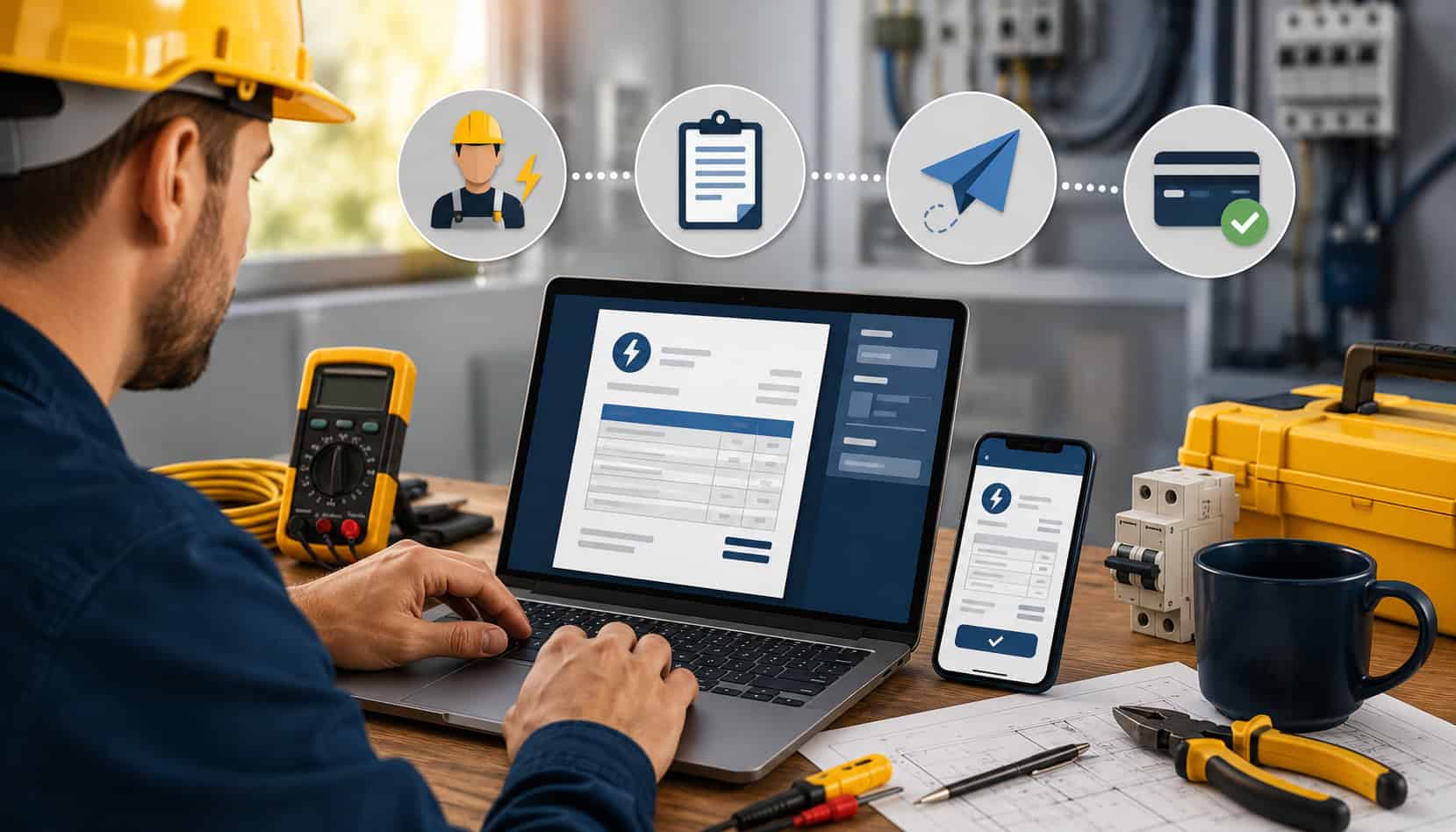
Online invoicing for electrical contractors is becoming a practical necessity for businesses that handle service calls, installations, inspections, emergency repairs, maintenance work, panel upgrades, remodel wiring, and larger project-based jobs.
Electrical work often moves fast: a technician may finish a repair in the field, a project manager may need to collect a deposit before ordering materials, and an office manager may need to track partial payments across several open jobs. When billing is handled manually, invoices can be delayed, payments can be missed, and customer questions can take longer to resolve.
Online invoicing helps electrical businesses create, send, track, and manage invoices digitally. Instead of relying only on paper forms, mailed bills, handwritten notes, or disconnected spreadsheets, contractors can use digital billing tools to send professional invoices, attach payment links, monitor unpaid balances, and store customer records in one place.
This improves payment tracking, helps customers pay more conveniently, and gives the business better visibility into cash flow.
For electricians, online billing is especially useful because work often happens outside the office. A technician may complete a service call and send the invoice from a phone or tablet before leaving the jobsite.
A billing team may convert an approved estimate into an invoice without retyping the same details. A contractor may collect a deposit, send progress invoices, and track the final balance for larger jobs. These workflows make online invoicing for electrical contractors a strong fit for both small shops and growing electrical service companies.
What Is Online Invoicing for Electrical Contractors?
Online invoicing for electrical contractors is the process of creating, sending, tracking, and managing invoices through digital tools instead of relying only on manual billing.
An online invoice can include labor, materials, diagnostic fees, permits, service call charges, emergency rates, taxes, discounts, deposits, and payment terms. Once created, it can be sent by email, text, customer portal, or payment link.
In practical terms, online invoicing explained for electricians means replacing slow billing steps with a more organized workflow.
A contractor can create an estimate, get approval, complete the work, convert that estimate into an invoice, send it to the customer, and collect payment online. The invoice can then be marked paid automatically or updated by the office team after payment is received.
This matters because electrical service invoicing can involve many moving parts. A simple outlet repair may only need a one-time invoice, while a panel upgrade or commercial wiring job may involve deposits, change orders, material charges, inspections, and progress billing. Online systems make it easier to document those details clearly.
Electrician invoicing software often includes customer profiles, job history, invoice templates, payment reminders, digital receipts, recurring billing, and reporting. More advanced invoicing systems for electrical contractors may also connect with scheduling, accounting, field service management, or payment processing tools.
The goal is to make billing faster, cleaner, and easier to track. For a contractor, that means fewer missing invoices and less time chasing payments. For customers, it means a professional invoice that is easy to understand and simple to pay.
Why Electricians Are Switching to Digital Invoicing
Electricians are switching to digital invoices because manual billing creates delays that can hurt cash flow. When invoices are written later, mailed from the office, or entered manually after technicians submit paperwork, the business often waits longer to get paid. Online billing for electrical services shortens that gap by allowing invoices to be sent soon after the job is complete.
Digital invoicing also improves organization. Instead of searching through paper files, text messages, handwritten job sheets, or disconnected spreadsheets, teams can view customer records, invoice status, payment history, and open balances from one system. This helps office managers, dispatchers, technicians, and owners stay aligned.
For contractors managing multiple jobs, digital invoices for electricians can reduce confusion. Each invoice can be connected to a customer, job, estimate, deposit, payment, or receipt. That makes it easier to answer questions such as: Has the customer paid the deposit? Is the final balance still open? Did the technician include materials? Was the emergency fee added? Was the invoice sent?
Online invoicing also supports remote billing. A technician in the field can send an invoice after a service call, while the office can review unpaid invoices without waiting for paperwork to return. This is especially useful for contractors handling both residential and commercial work.
Many electrical businesses also adopt digital billing because customer expectations have changed. Customers often prefer to pay through secure links, cards, ACH, or mobile-friendly payment pages. Offering more than one payment method can make payment collection for electricians smoother, especially for large invoices where ACH may be useful.
Resources on ACH payments for electricians explain how bank payment options can support larger invoices and recurring billing.
| Invoicing Feature | Why It Matters | Business Benefit |
| Digital invoice creation | Reduces manual paperwork | Faster billing after jobs |
| Payment links | Makes it easier for customers to pay | Quicker collections |
| Invoice tracking | Shows paid, unpaid, partial, and overdue invoices | Better cash flow visibility |
| Automated reminders | Reduces manual follow-up | Fewer missed payments |
| Mobile invoicing | Supports field billing | Invoices can be sent from the jobsite |
| Estimate-to-invoice conversion | Avoids duplicate data entry | Cleaner documentation |
| Customer history | Stores invoices, receipts, and job records | Easier service follow-up |
| Online payment integration | Supports cards, ACH, and digital payment options | More convenient payment collection |
Faster Invoice Delivery
Faster invoice delivery is one of the clearest benefits of online invoicing for electrical contractors. When a service call, installation, inspection, or repair is completed, the invoice can be sent right away instead of waiting for paperwork to return to the office. This is especially useful for technicians who finish jobs throughout the day and need a quick way to close out billing.
A delayed invoice creates friction. Customers may forget job details, lose urgency, or wait until they receive a paper bill. When an invoice arrives immediately, the work is still fresh in the customer’s mind, and payment is easier to request. Digital delivery also gives the customer a clear record of what was done, what is owed, and how to pay.
For emergency electrical repairs, fast invoicing can be especially important. The customer needed urgent service, the work has been completed, and the business should not have to wait days to start the payment process.
Better Payment Tracking
Online invoicing gives electrical contractors a clearer view of unpaid invoices, deposits, partial payments, overdue balances, and completed transactions. This matters because electrical jobs are not always paid in one step. A contractor may collect a deposit before ordering materials, bill a progress payment after rough-in, and collect the remaining balance after final inspection.
With manual tracking, it is easy for payment details to become scattered. One payment may be noted in a spreadsheet, another in an email, and another on a paper receipt. Electrician invoice management tools help centralize those records so the business can see what has been billed, what has been paid, and what still needs follow-up.
Better tracking also helps reduce awkward customer conversations. Instead of guessing whether a payment was received, the team can check invoice status and payment history. This supports cleaner communication and fewer disputes.
Electrical contractor payment processing tools can also help connect invoices with actual payments, making reconciliation easier. A payment processing setup checklist for electricians can help contractors think through mobile payments, invoicing, ACH, card acceptance, compliance, and reporting.
Easier Recordkeeping
Digital invoices make recordkeeping easier by storing billing details in a searchable format. Contractors can look up customer history, past invoices, receipts, project notes, payment status, and service records without digging through paper folders. This is valuable for bookkeeping, tax preparation, customer support, warranty questions, and repeat service calls.
Good records also support better documentation. If a customer asks why a charge was included, the invoice can show labor, materials, service fees, discounts, and taxes. If a project has multiple billing stages, each invoice can show which phase was billed and what balance remains.
Digital recordkeeping helps office teams stay organized when technicians are handling several jobs per day. Instead of waiting for handwritten paperwork, the business can capture invoice details quickly and keep customer records updated.
Key Features of Electrician Invoicing Software
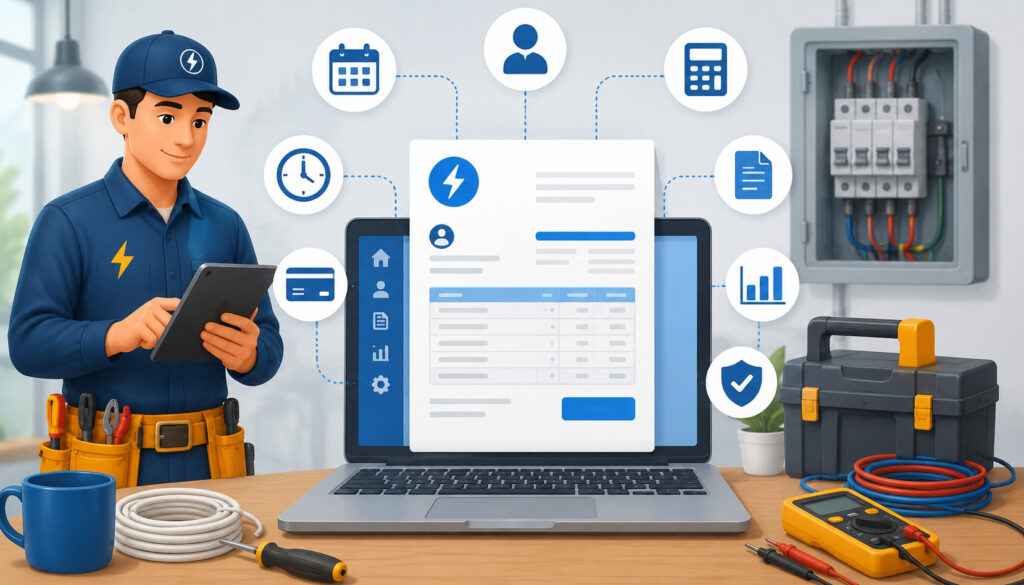
Electrician invoicing software should do more than create a basic bill. It should support the way electrical contractors actually work. That includes service calls, quoted jobs, emergency repairs, recurring maintenance, commercial work, deposits, change orders, and multi-stage projects.
A useful system should allow itemized billing so customers can see labor, materials, permits, diagnostics, trip charges, and other fees. It should also allow custom invoice templates, customer profiles, tax settings, due dates, discounts, and payment terms. These details make invoices easier to understand and easier to manage.
Customer management is another important feature. Electrical businesses often serve repeat customers, property managers, builders, landlords, facilities teams, and commercial clients. Storing customer contact details, job locations, invoice history, and payment history helps the business provide better service.
Recurring invoices can be helpful for maintenance agreements, inspection programs, or ongoing electrical service contracts. Estimate conversion is also valuable because it allows approved quotes to become invoices without retyping everything. That reduces errors and saves time.
Payment links and online payment integration are major features for payment collection. Invoices that allow customers to pay directly by card, ACH, or other approved methods can reduce delays. The broader topic of billing software integration for electricians explains how invoicing, accounting, scheduling, and payment tools can work together so billing data does not sit in separate systems.
Invoice reminders are another practical feature. Instead of manually checking every unpaid invoice, the system can send reminders before or after the due date. This keeps follow-up consistent without making the office team chase every balance manually.
Mobile Invoicing From the Jobsite
Mobile invoicing from the jobsite allows electricians to create and send invoices directly from a phone or tablet after completing work. This is useful for service calls, troubleshooting visits, emergency repairs, fixture installations, breaker replacements, and small jobs where payment should be collected quickly.
A technician can enter labor time, materials used, job notes, photos, and charges while the details are still fresh. The invoice can then be reviewed with the customer, sent digitally, and paid through a secure link if online payments are enabled.
Mobile invoicing also reduces the risk of lost paperwork. When technicians use paper forms, invoices may sit in a truck, get damaged, or reach the office late. A digital workflow sends information to the system immediately.
For growing electrical businesses, mobile invoicing helps standardize field billing. Every technician can use the same invoice format, pricing rules, payment terms, and approval process. That creates a more professional customer experience and gives the office better control.
Online Payment Integration
Online payment integration allows customers to pay invoices through digital payment options such as cards, ACH, or secure payment links. This is one of the most important parts of contractor invoicing solutions because sending an invoice is only half the process. The business also needs a convenient way to collect payment.
When payment links are built into invoices, customers do not have to call the office, mail a check, or arrange a separate payment step. They can open the invoice, review the charges, and pay through the available options. This can improve collection speed and reduce administrative work.
For larger electrical jobs, ACH can be useful because bank payments may be preferred for high-value invoices. Card payments may be more convenient for smaller service calls or customers who want rewards or faster payment confirmation. Offering both can give customers flexibility.
The key is to use secure payment pages rather than asking customers to send card details through email or text. A payment processing overview from this external payment resource notes that businesses can accept payments in-store, online, or on mobile devices, including cards, contactless payments, mobile wallets, and ACH.
How Online Invoicing Works for Electrical Contractors
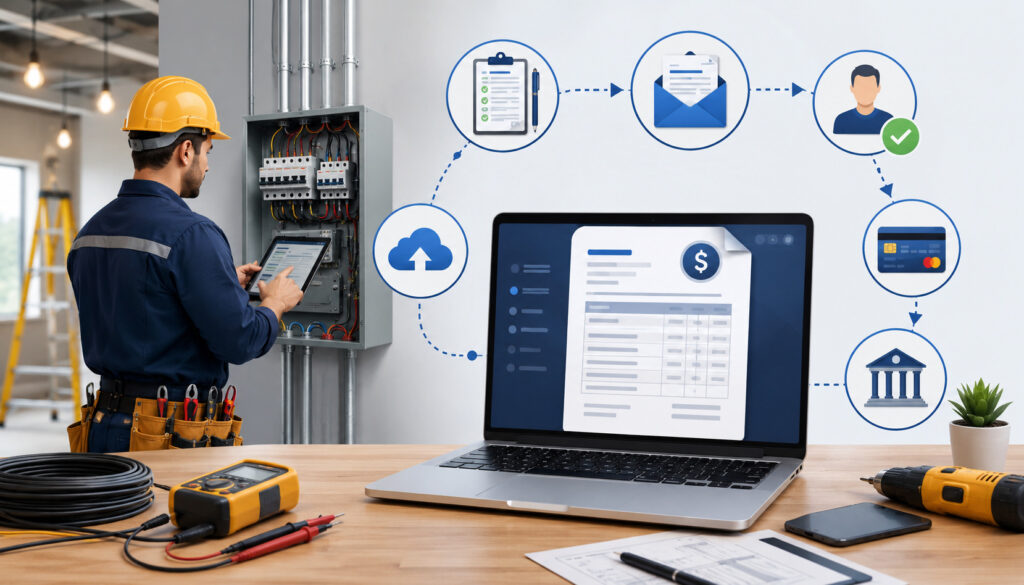
Online invoicing usually follows a clear workflow. First, the contractor creates an estimate or quote. This may include labor, materials, permits, expected project phases, and payment terms. Once the customer approves the estimate, the job can be scheduled and the details can be carried into the invoice later.
After the work is completed, the invoice is created. For a simple service call, this may happen immediately from the jobsite. For a larger project, the invoice may be created by the office after reviewing time, materials, change orders, deposits, and milestone progress.
Next, the invoice is sent digitally. The customer may receive it by email, text, or portal notification. The invoice should clearly show what was done, what is owed, when payment is due, and how payment can be made.
If online payments are connected, the customer can pay through a secure link. Once payment is completed, the invoice can be marked paid, and the customer can receive a receipt. If the system connects with accounting or payment processing tools, payment details may sync automatically or be easier to reconcile.
For unpaid invoices, automated reminders can help. The system may send a reminder before the due date, on the due date, and after the invoice becomes overdue. This gives the business a consistent follow-up process without relying only on manual calls.
Finally, records are stored. The invoice, payment status, customer details, receipts, and job notes can remain available for bookkeeping, reporting, customer service, and future work.
Creating Professional Electrical Service Invoices
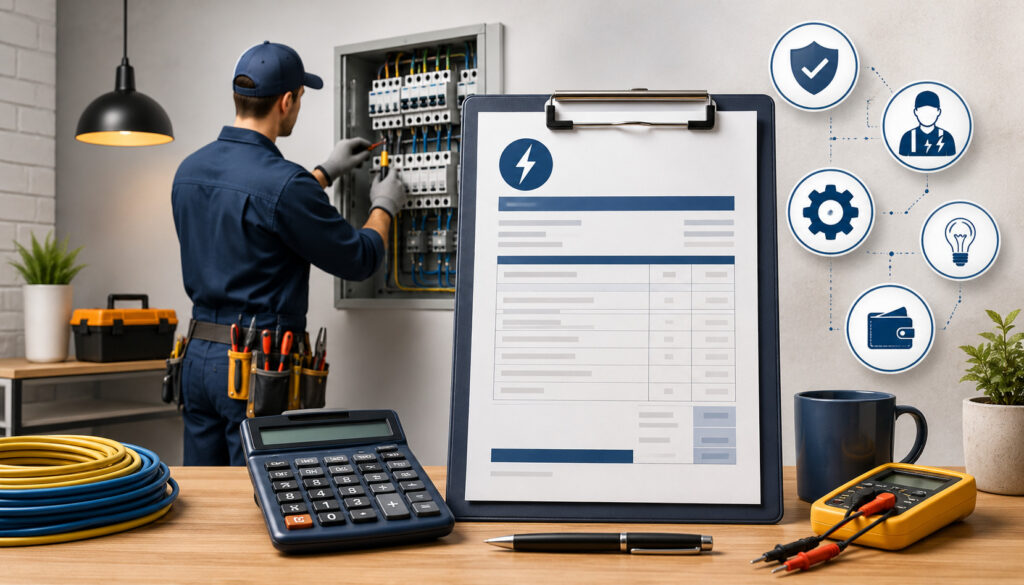
Professional electrical service invoices should be clear, complete, and easy for customers to understand. A good invoice does not just ask for payment; it explains the work performed and supports the value of the service.
An electrical invoice should include the business contact information, customer details, service address, invoice number, invoice date, due date, payment terms, and a detailed description of the work. It should also list labor charges, materials, diagnostic fees, emergency fees, permit costs, taxes, deposits, discounts, and final balance.
For service calls, the invoice may include arrival time, work completed, parts used, and any recommendations. For installations, it may include equipment, fixtures, panels, wiring, breakers, or other materials. For larger jobs, it may include project phases, milestone billing, deposits, retained balances, and approved change orders.
Clear invoices help reduce disputes. Customers are less likely to question charges when they can see what was included. A vague invoice that says “electrical work” may create confusion, especially when the total is high. Itemized billing shows professionalism and helps customers understand the cost.
Professional invoices should also include payment options. If customers can pay online, include a secure payment link or instructions. If payment is due upon completion, say so clearly. If deposits are required before work begins, state that before the job starts.
Itemizing Labor and Materials Clearly
Itemizing labor and materials clearly is one of the best ways to build customer trust. Electrical work can be technical, and many customers may not fully understand what went into the job. A clear invoice helps them see the difference between labor, parts, permits, diagnostic time, and special fees.
For example, instead of writing “repair electrical issue,” the invoice may list troubleshooting, replacement breaker, wire repair, service call fee, and labor hours. This gives the customer a better understanding of the service provided.
Itemized billing also helps the contractor. If a customer questions a charge later, the business has documentation. If a technician forgets to include materials, a structured invoice template can reduce that risk. If the office needs to review profitability, detailed invoices show where revenue is coming from.
Handling Deposits and Progress Billing
Deposits and progress billing are common for larger electrical jobs. A contractor may need a deposit before ordering materials, scheduling labor, pulling permits, or reserving project time. Progress billing can then be used as the job reaches milestones.
For example, a project may include a deposit invoice, a rough-in invoice, a trim-out invoice, and a final invoice after inspection or completion. Online invoicing makes it easier to track each stage and show the remaining balance.
This is especially helpful when jobs change. Electrical projects may uncover unexpected wiring issues, additional panel work, code-related updates, or customer-requested upgrades. If change orders are approved, they should be documented and billed clearly.
Progress billing should always be tied to clear terms. Customers should understand when each payment is due and what milestone it covers. This reduces confusion and helps protect cash flow during longer projects.
Payment Collection Benefits of Online Invoicing
Online invoicing helps electrical contractors collect payments more efficiently by reducing friction. When customers receive a digital invoice with a payment link, they can pay from a phone, computer, or tablet. They do not have to wait for a mailed bill, call the office during business hours, or write a check.
This convenience can lead to faster payment. A customer who receives the invoice immediately after a job may pay while the service experience is still fresh. A customer who receives a reminder before the due date may pay before the balance becomes overdue.
Online invoices also help with cash flow. Electrical contractors often pay for materials, fuel, labor, insurance, permits, vehicles, tools, and overhead before receiving final payment. Faster collections can reduce pressure on working capital and make it easier to plan upcoming jobs.
Payment collection for electricians also improves when multiple payment methods are available. Some customers prefer cards. Others prefer ACH. Some commercial clients may have internal approval processes and need detailed invoices before paying. Online invoicing gives each customer a clear bill and a defined payment path.
Automated reminders are another major benefit. Manual follow-up can be inconsistent, especially when the office is busy. Invoice automation for contractors can send scheduled reminders, helping reduce late payments without requiring the team to manually chase every invoice.
Security and Data Protection for Online Invoices
Security matters when electrical contractors send digital invoices and accept online payments. Customers trust the business with contact details, job locations, billing information, and payment activity. A professional invoicing system should help protect that information.
Secure payment pages are important because they reduce the need for staff to handle sensitive payment details directly. Customers should be able to pay through encrypted payment links or hosted payment pages instead of sending card numbers through email or text. The PCI Security Standards Council describes its role as developing standards and resources to help protect payment data worldwide.
User permissions also matter. Not every employee needs access to every financial function. A technician may need to create invoices and collect payments, while an office manager may need reporting and refund access. Role-based permissions help reduce mistakes and limit unnecessary access.
Secure cloud storage can also support better record protection, but contractors should use strong passwords, multi-factor authentication where available, and careful access controls. The Federal Trade Commission provides cybersecurity guidance for small businesses, including practical steps for protecting information and reducing cyber risk.
Refund controls are another important safeguard. Businesses should define who can issue refunds, void payments, adjust invoices, or change customer balances. This protects the business from errors and unauthorized activity.
Common Online Invoicing Mistakes Electricians Should Avoid
Online invoicing is helpful, but only when it is used correctly. One common mistake is sending vague invoices. If the invoice only says “electrical services,” the customer may not understand the charges. Vague descriptions can create disputes, especially for higher-value work.
Another mistake is leaving out payment terms. Every invoice should show the due date, accepted payment methods, deposit requirements, late payment policy if applicable, and any balance remaining. Customers should not have to guess when or how to pay.
Incorrect tax calculations can also cause problems. Electrical contractors should make sure their invoicing system is configured properly for taxable items, non-taxable services, exemptions, and local requirements that apply to their work. When unsure, billing teams should consult a qualified tax professional.
Duplicate invoices are another issue. If the office and field team are not coordinated, a customer may receive two invoices for the same job. This creates confusion and can damage trust. A centralized invoicing system helps reduce that risk.
Weak follow-up is also common. Sending an invoice once is not always enough. Contractors should use reminders and review unpaid balances regularly. Delayed invoice delivery is another mistake. The longer a business waits to invoice, the longer it usually waits to collect.
Insecure payment handling is one of the most serious mistakes. Staff should not store card numbers in notes, spreadsheets, messages, or paper files. Safe payment handling should be part of the company’s billing process.
Best Practices for Online Invoicing in Electrical Businesses
The best online invoicing process is consistent, clear, and easy for both the business and the customer. Start by sending invoices quickly. The sooner an invoice is delivered, the sooner payment collection can begin. For service calls, send the invoice from the jobsite whenever possible.
Use itemized billing. Break out labor, materials, diagnostics, permits, emergency fees, discounts, deposits, and taxes. Clear details reduce disputes and make the invoice feel more professional.
Automate reminders when appropriate. Reminder schedules can help customers pay on time without forcing the office to manually follow up on every account. Keep reminders professional and direct.
Offer multiple payment methods. Cards may be convenient for many customers, while ACH may be useful for larger invoices or recurring work. A guide on payment processing solutions for electricians highlights the value of offering payment choice, including ACH for larger invoices while keeping card options available.
Document approvals. If a customer approves an estimate, deposit, change order, or extra work, keep that approval connected to the job record. This helps prevent disputes later.
Reconcile payments regularly. Daily or frequent reconciliation helps the office match payments to invoices, spot errors, and keep reports accurate. Review unpaid balances weekly so overdue invoices do not sit unnoticed.
Train your team. Technicians should know when to invoice, what details to include, how to collect payment securely, and when to send questions to the office. Office staff should know how to manage reminders, refunds, adjustments, and reporting.
What is online invoicing for electrical contractors?
Online invoicing for electrical contractors is the digital process of creating, sending, tracking, and managing invoices for electrical work. It can be used for service calls, installations, repairs, maintenance contracts, emergency work, deposits, progress billing, and final payments.
Instead of relying only on paper invoices or manual spreadsheets, contractors can send digital invoices by email, text, or portal. Many systems also include payment links, reminders, receipts, customer history, and reporting.
How does electrician invoicing software work?
Electrician invoicing software helps contractors create professional invoices using customer details, job information, labor charges, materials, taxes, and payment terms. Some systems allow estimates to be converted into invoices, which reduces duplicate data entry.
After the invoice is sent, the software can track whether it is viewed, unpaid, partially paid, overdue, or paid. If payment processing is connected, the invoice may update automatically after the customer pays online.
Can electricians send invoices from the jobsite?
Yes. Many electrician invoicing software tools support mobile invoicing from a phone or tablet. A technician can enter job details, add charges, send the invoice, and sometimes collect payment before leaving the site.
This is helpful for service calls, emergency repairs, troubleshooting visits, and smaller installations where immediate billing makes sense.
What should an electrical invoice include?
An electrical invoice should include customer information, service address, invoice number, invoice date, due date, payment terms, labor, materials, diagnostics, permits, emergency fees, taxes, deposits, discounts, and total balance due.
It should also include a clear description of the work performed and available payment options. For larger jobs, it may include project milestones, approved change orders, and progress billing details.
How do online invoices help reduce late payments?
Online invoices reduce late payments by delivering bills faster and making payment easier. Customers can receive invoices immediately and pay through digital options instead of waiting for paper bills or calling the office.
Automated reminders also help. They keep payment requests consistent and reduce the chance that unpaid invoices are forgotten.
Can customers pay invoices online?
Yes. Customers can often pay online through secure payment links, hosted payment pages, customer portals, cards, ACH, or other supported payment methods. The available options depend on the invoicing and payment processing setup.
Online payments are useful because they reduce friction. Customers can review the invoice and pay without needing a separate phone call or mailed payment.
Are online invoices secure?
Online invoices can be secure when contractors use reputable systems, encrypted payment pages, strong passwords, user permissions, and safe payment handling practices. Sensitive payment information should not be collected through email, text, or handwritten notes.
Contractors should also limit employee access based on job responsibilities and review refund or adjustment permissions regularly.
How can electricians improve invoice tracking?
Electricians can improve invoice tracking by using invoice numbers, customer profiles, payment status labels, automated reminders, daily reconciliation, and weekly unpaid balance reviews. They should also connect deposits, partial payments, and final payments to the correct job.
Consistent processes matter. When every invoice follows the same workflow, the business can find records faster and collect payments more reliably.
Conclusion
Online invoicing for electrical contractors helps improve billing speed, organization, payment collection, customer convenience, and cash flow. It gives electricians a better way to send invoices after service calls, manage deposits, track progress billing, collect online payments, and keep accurate records.
The strongest invoicing systems for electrical contractors combine clear itemized billing, secure digital payment options, invoice automation, customer history, and consistent follow-up. When invoices are professional, easy to understand, and simple to pay, customers have a smoother experience and contractors spend less time chasing balances.
For electrical businesses that want cleaner billing and faster collections, online invoicing is not just a software upgrade. It is a better payment workflow from estimate to final receipt.